Complete guide to sea safety: signaling, accident prevention, buddy rule and what to do in emergencies.
Spearfishing is a wonderful passion, but the sea does not forgive carelessness. In this guide I cover everything you need to know to always come back home safely: from proper signaling to blackout prevention, including a true story that should make everyone reflect.
Mario's Story: Behind Every Buoy There's a Person
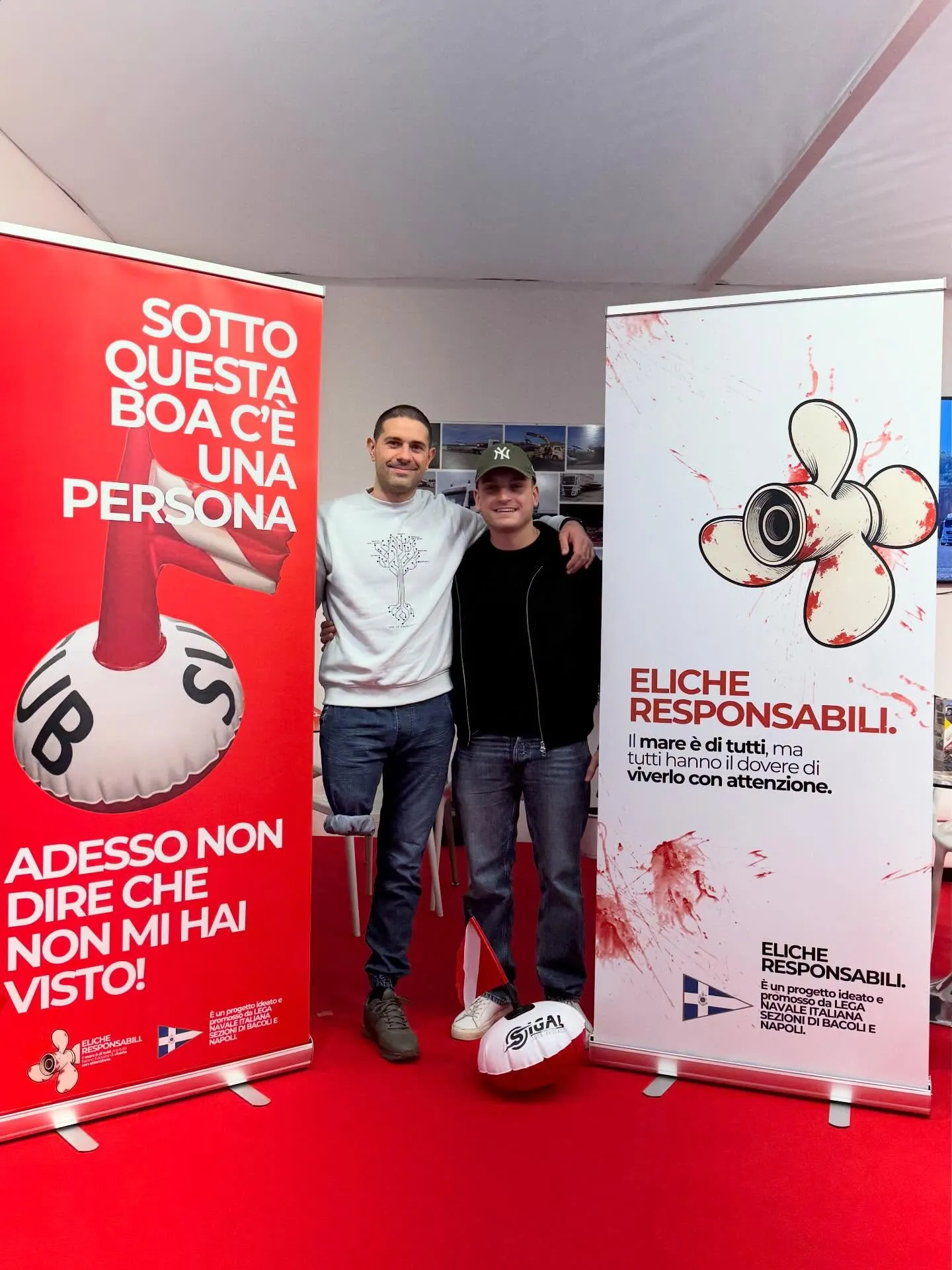
Mario is a friend of mine, an amazing spearfisher, but most importantly he's the father of a beautiful baby girl. Last May he was the victim of a terrible accident at sea, despite having not one but two dive flags with him.
Mario survived by a miracle. He fought like only someone who has something enormous to protect can: to come home, to his baby girl, to his family.
Behind every buoy there's a person, a story. There's someone waiting on shore, a life that deserves respect. Today Mario is here, he can tell his story, he can hold his daughter. But it doesn't always end this way.
That's why talking about it is a duty. That's why sharing isn't rhetoric, it's responsibility.
Slow down. Look. Respect.
Because under that buoy, it could be YOU.
I publicly thank Giorgio Mulazzani and the Lega Navale di Bacoli e Napoli for their commitment to raising awareness on these issues.
Sea Signaling: The Alpha Flag
Signaling is the first and most important safety tool for spearfishers. Italian law requires the use of a clearly visible float with an Alpha flag (red with white diagonal stripe).
Signaling Requirements
- Float with Alpha flag visible from at least 300 meters
- Stay within 50 meters of the float
- If using a support boat, the flag must be hoisted on the boat
- Night spearfishing is prohibited
What Boats Must Do
Boats must keep at least 100 meters from the Alpha flag and significantly reduce speed. Unfortunately, as Mario's story shows, not all boaters know or respect this rule. Raising awareness among boaters is equally fundamental.
Never Dive Alone: The Buddy Rule
Golden Rule: Never dive alone. Shallow water blackout (syncope) can occur without any warning, even to experienced divers. Having a buddy watching from the surface is the only thing that can save your life in those critical seconds.
How the Buddy System Works
- One diver goes down, the other watches from the surface
- The surface buddy must follow the diver's bubbles and movements
- Alternate after each dive or series of dives
- Establish clear signals before entering the water (ok, problem, ascending)
- Your buddy must know how to perform rescue maneuvers
Blackout (Syncope) Prevention
Freediving blackout is loss of consciousness caused by reduced blood oxygen levels. It's the most serious and insidious risk in spearfishing because it can strike without warning signs.
Main Causes
- Hyperventilation: reduces blood CO2, delaying the urge to breathe and masking oxygen deficiency
- Exceeding your limits: dives too deep or too long for your level
- Fatigue: too many consecutive dives without adequate rest
- Poor physical condition: diving when sick, after a sleepless night or after drinking alcohol
How to Prevent It
- Never hyperventilate before diving
- Allow adequate recovery time between dives (at least double the dive time)
- Listen to your body: if you feel the slightest need to breathe, ascend immediately
- Never push apneas, especially at the end of the day when you're tired
- Take a freediving course with qualified instructors
Essential Safety Equipment
- Buoy with Alpha flag: legally required, must be clearly visible and in good condition
- Dive knife: to free yourself from nets, fishing lines or seaweed. Always keep it accessible
- Whistle or acoustic signal: to attract attention in case of emergency
- Line connecting to buoy: keeps you connected to signaling and can help you ascend safely
- Dive watch or computer: to monitor dive and recovery times
Check Weather and Sea Conditions
Before every outing, always check weather forecasts and sea conditions. Do not enter the water if:
- The sea is very rough or there are strong currents
- A rapid worsening of conditions is expected
- There is poor visibility (murky water, fog)
- There is heavy boat traffic in the area
What to Do in an Emergency
Buddy Blackout
- Immediately bring your buddy to the surface, keeping their face out of the water
- Remove mask and snorkel
- Blow on their face to stimulate the breathing reflex
- If they don't resume breathing, begin mouth-to-mouth resuscitation
- Call 1530 (Coast Guard) or 118
- Get your buddy to shore as soon as possible
Boat Accident
- If possible, note the boat's name or registration number
- Call 1530 (Coast Guard) immediately
- Do not move the injured person if you suspect spinal injuries
- Stay calm and provide your location coordinates
Emergency Numbers:
1530 - Coast Guard
118 - Medical Emergency
112 - Universal Emergency Number
Conclusion: Safety Is Not Optional
Mario's story reminds us that even when doing everything right, risk exists. Two flags were not enough to protect him. But that's exactly why we must do even more: always signal ourselves, fish in pairs, respect our limits and above all raise awareness among boaters.
Every time you enter the water, remember that someone is waiting for you on shore. Fish with passion, but always come home.
For more on spearfishing regulations, check out our article 2026 Updated Rules and Regulations. If you're a beginner, also read How to Start Freediving.
Watch my sea safety videos
On my YouTube channel you can find videos showing how I signal at sea, the safety equipment I use and practical tips for safe spearfishing.
Visit my YouTube channel