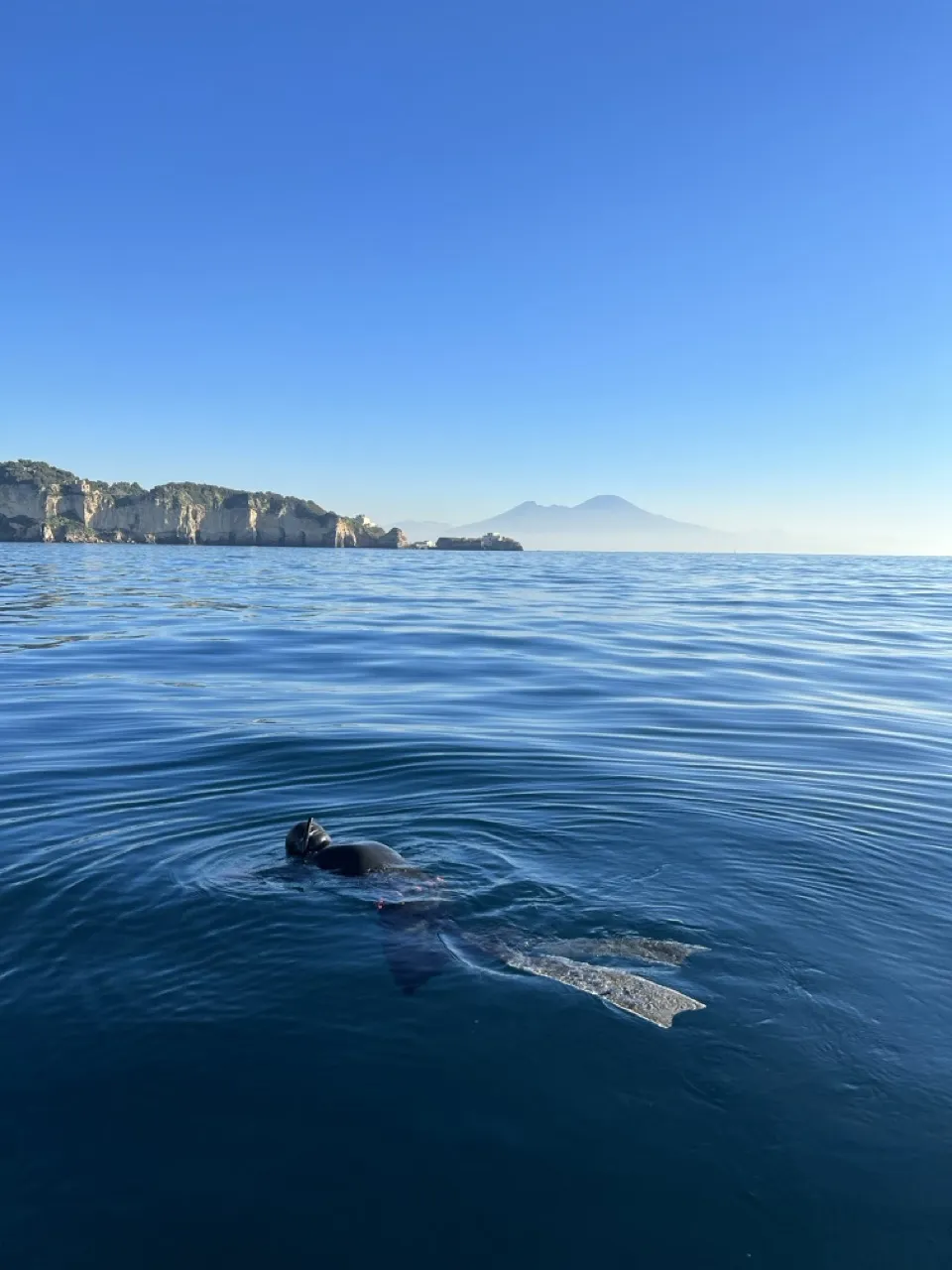
A complete guide for beginners: discover breathing techniques, equipment and tips to start freediving safely.
Freediving is a fascinating discipline that lets you explore the underwater world in a natural and silent way. Whether you want to practise it for spearfishing, photography or simply for the pleasure of diving, this guide will help you take your first steps.
What Is Freediving
Freediving (apnea in Italian) is the practice of holding your breath during underwater dives. Unlike scuba diving, the freediver dives using only the air contained in their own lungs.
Before You Start: The Course
Essential: Before practising freediving, it is essential to take a course with qualified instructors. A course will teach you breathing techniques, stress management and the fundamental safety procedures.
What You Will Learn in a Course
- Diaphragmatic breathing techniques
- Relaxation and stress management
- Ear equalization
- Safety procedures
- Knowing your limits
Breathing Techniques
Breathing is the foundation of freediving. Here are the basic techniques you will need to master:
Diaphragmatic Breathing
Breathe using your diaphragm instead of your chest. When you inhale, your belly expands; when you exhale, it deflates. This technique lets you use your full lung capacity.
Pre-Dive Relaxation
- Breathe slowly for 2-3 minutes before the dive
- Focus on relaxing all your muscles
- Do not hyperventilate (it is dangerous!)
- The last breath should be deep but not forced
Basic Equipment
To start freediving you will need:
Mask
Choose a low-volume mask that fits your face well. Low volume makes equalization easier and reduces drag.
Snorkel
A simple, flexible snorkel. Avoid models with complex valves that can jam.
Fins
Long plastic fins are fine to begin with. Over time you can move on to fiberglass or carbon fins.
Wetsuit
The choice depends on the water temperature. In summer 3mm may be enough; in winter you need at least 5-7mm.
Safety
Golden Rule: Never Freedive Alone!
A blackout (loss of consciousness) can happen without warning. Having a buddy watching over you can save your life.
Other Safety Rules
- Do not hyperventilate before diving
- Respect your limits
- Do not train when you are tired or ill
- Wait at least 2 hours after meals
- Increase depth and times gradually
First Exercises
Start with these exercises in shallow, safe water:
- Static apnea: Hold your breath while staying still at the surface
- Dynamic apnea: Swim horizontally while holding your breath
- Shallow dives: Start with 3-5 metres and increase gradually
Progression
Progression in freediving must be gradual. Don't try to break records; focus on technique and comfort. With constant practice, your times and depths will improve naturally.
Conclusion
Freediving is a wonderful discipline that lets you connect with the sea in a unique way. Start with a course, practise consistently and always respect your limits. The sea will be there waiting for you.
To learn more about the equipment you need, read our article Spearfishing for Beginners which has details on the best gear.
Want to see freediving in practice?
On my YouTube channel you'll find video tutorials and practical demonstrations for anyone who wants to start freediving.
Visit my YouTube channel